

When the number on the scale is going down, there’s another number we should be thinking about.
If you’re taking a GLP-1 medication such as Ozempic®, Wegovy®, Mounjaro® or Zepbound®, chances are you’ve been paying close attention to the scale.
And seeing that number move can feel incredibly exciting.
But here’s something we want more people talking about:
Not all weight loss is the same.
When you lose weight, your body doesn’t exclusively lose fat. Some of that weight can come from lean body mass, which includes muscle and other non-fat tissues.
That’s why we believe a successful weight-loss journey shouldn’t only ask:
“How much weight did I lose?”
It should also ask:
“How strong am I staying along the way?”
GLP-1s, Weight Loss & Lean Mass: What’s Really Happening?
GLP-1-based medications have transformed the conversation around weight management. They can help appropriate patients achieve substantial weight loss and important health benefits.
But as the pounds come off, body composition matters.
Research has found that the majority of weight lost with GLP-1 and related incretin therapies comes from fat—but reductions in lean mass can occur as well. A recent systematic review found that lean mass represented roughly 25–40% of total weight lost across several incretin therapies. Importantly, the proportion of lean mass lost was broadly comparable to that seen with lifestyle-induced weight loss.
In other words:
Muscle preservation isn’t just a “GLP-1 problem.” It’s a weight-loss conversation.
And it’s an important one.
Wait…Lean Mass and Muscle Aren’t Exactly the Same Thing
Here’s an important distinction that sometimes gets lost on social media.
Lean mass isn’t synonymous with skeletal muscle.
Body-composition measurements may classify water, organs and other non-fat tissues as part of lean or fat-free mass. So when you hear that someone “lost lean mass,” it doesn’t necessarily mean that every pound represented lost muscle—or that their strength declined by the same amount. Researchers continue to study how changes measured on body-composition testing translate into actual muscle quantity, quality and physical function.
That’s one reason we don’t want patients to panic about a percentage they saw online.
Instead, we want them thinking proactively about strength, nutrition, movement and body composition throughout their weight-loss journey.
Why Does Muscle Matter So Much?

Muscle isn’t just about having defined arms or abs.
Your muscles help you live your life.
They help you get out of a chair.
Carry groceries.
Climb stairs.
Pick up your kids or grandkids.
Stay active.
Maintain independence as you age.
And continue doing the activities you love.
Maintain a healthy weight
Prevent osteoporosis
Preserving muscle and physical function becomes increasingly important as we get older, making it especially valuable to think beyond the scale during periods of significant weight loss.
That’s why the goal shouldn’t simply be:
Lose as much weight as possible.
A better goal is:
Lose fat while doing everything reasonably possible to preserve muscle, strength and function.
Researchers increasingly refer to this broader idea as high-quality weight loss—looking beyond total pounds lost to consider fat loss, lean tissue, muscle function, nutrition and overall metabolic health.
The Scale Doesn’t Tell the Whole Story
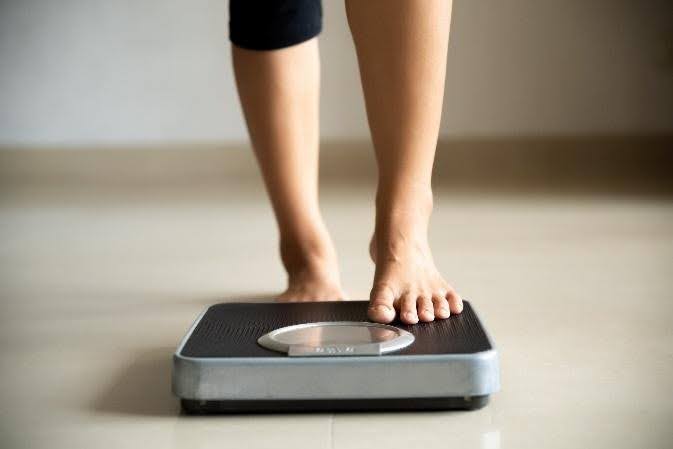
Imagine two people each lose 30 pounds.
The scale says they achieved exactly the same thing.
But what if one person maintained more of their muscle and strength while losing primarily body fat?
Those are two very different body-composition stories.
That’s why your bathroom scale is useful—but limited.
It tells you how much you weigh.
It doesn’t tell you everything about what you’re made of.
And when you’re undergoing significant weight loss, that’s an important distinction.
So, How Can You Help Protect Muscle During Weight Loss?
There isn’t one magic solution.
Muscle preservation requires a bigger-picture approach, ideally coordinated with the healthcare professional managing your weight-loss treatment.
Three areas deserve particular attention.
- Prioritize Resistance Training


Walking, hiking, cycling and cardiovascular exercise are wonderful for your overall health.
But when the goal is specifically preserving muscle during weight loss, resistance training deserves a starring role.
Your muscles need a reason to stick around.
Resistance exercises create a stimulus that essentially tells your body:
“We still need this muscle.”
A joint nutrition advisory from major obesity and nutrition organizations emphasizes structured resistance or strength training as an important strategy for preserving lean mass during GLP-1-assisted weight loss.
That could include appropriately programmed:
- Weight training
- Resistance bands
- Body-weight exercises
- Strength machines
- Functional resistance exercises
Your ideal exercise program depends on your health, fitness level, mobility and medical history, so talk with your healthcare provider or qualified fitness professional about what’s appropriate for you.
- Don’t Forget About Protein & Nutrition
GLP-1 medications can significantly reduce appetite.
That’s part of why they’re effective—but eating less can also make it more challenging for some people to consume adequate protein and other nutrients.
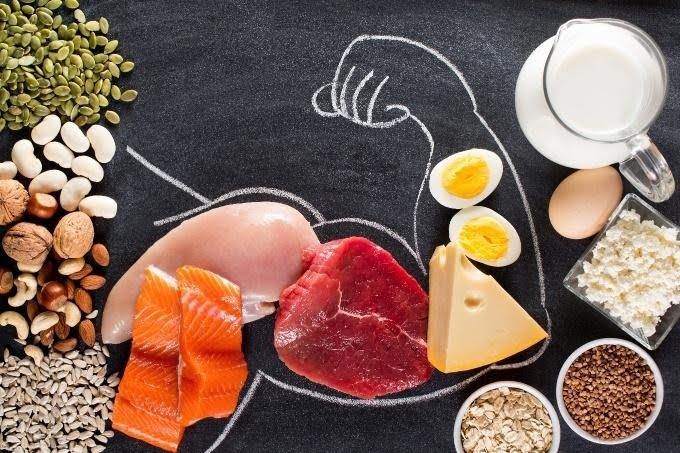
Protein provides amino acids your body needs to maintain and repair muscle tissue.
However, there’s an important caveat:
More protein isn’t a replacement for resistance training.
Current guidance emphasizes combining adequate nutrition with structured strength training rather than relying on protein alone. Individual protein needs also vary based on factors such as age, kidney function, health conditions, activity level and overall nutrition.
Your prescribing healthcare provider or registered dietitian can help determine what’s appropriate for you.
- Start Thinking About Strength—not Just Size
This might be our favorite mindset shift.
Instead of only asking:
“What size do I want to be?”
Start asking:
“What do I want my body to be able to DO?”
Maybe you want to feel stronger hiking.
Maybe you want more definition through your abdomen.
Maybe you want stronger legs.
Maybe you want to keep up with your kids.
Maybe you’re thinking about maintaining strength and independence as you age.
Those goals matter.
Where Does truSculpt Flex Fit In?
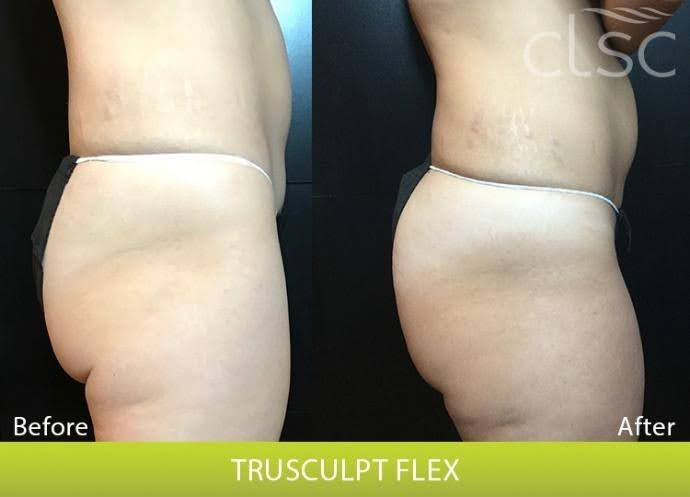
At Columbia Laser Skin Center, one of the technologies we offer is truSculpt Flex, a non-invasive muscle-stimulation treatment.
truSculpt Flex uses electrical muscle stimulation to create muscle contractions in targeted areas.
And here’s the distinction we think is incredibly important:
truSculpt Flex shouldn’t replace strength training, adequate nutrition or medical management.
Instead, we view it as a complementary aesthetic body-treatment option for appropriate patients who want to target specific muscle groups as part of a broader plan.
Depending on your goals and candidacy, we can discuss how truSculpt Flex might fit alongside the healthy habits you’re already building.
Because we’re not interested in helping you simply become smaller.
We want the conversation to include becoming stronger, healthier and more confident in your changing body.
What Does a truSculpt Flex Treatment Feel Like?

During a truSculpt Flex treatment, electrodes are placed over targeted muscle groups.
The device then delivers electrical stimulation that causes a series of muscle contractions.
Depending on the treatment plan, we can target areas such as the abdomen, buttocks and thighs while you relax during the session.
There’s no gym bag required—but we’re still going to encourage you to use that gym membership!
Think of muscle stimulation as one tool within a much bigger picture that includes resistance exercise, adequate nutrition, recovery and appropriate medical care.
Beyond the Scale: Redefining a Successful Transformation
The GLP-1 conversation has focused heavily on one thing:
How much weight can you lose?
We think the next conversation needs to be:
How can we help you support the body you’re creating along the way?
Because losing 20, 30, 50 or more pounds can be an incredible transformation.
But the number on the scale isn’t your only measure of progress.
Your strength matters.
Your energy matters.
Your mobility matters.
Your nutrition matters.
Your body composition matters.
And how you feel in your body matters.
Skinny Isn’t the Goal. Strong Is.
If you’re currently taking a GLP-1 medication or have experienced significant weight loss, don’t wait until you’ve reached your “goal weight” to start thinking about muscle.
Talk with your prescribing provider about nutrition and exercise. Incorporate appropriate resistance training. Pay attention to your strength and physical function—not only the number on the scale.
And if you’re interested in learning how truSculpt Flex might complement your body goals, we’d love to have that conversation with you.
Ready to Go Beyond the Scale?
Schedule a personalized consultation at Columbia Laser Skin Center to learn more about truSculpt Flex and the body-contouring and muscle-focused solutions that may be appropriate for you.
Because the best transformation isn’t simply about weighing less.
It’s about building a body that helps you feel strong, capable and confident for what’s ahead.
Individual results vary. truSculpt Flex is an aesthetic treatment and is not a treatment for muscle loss caused by GLP-1 medications. It does not replace resistance exercise, adequate nutrition or medical care. Patients taking GLP-1 or other weight-management medications should discuss nutrition, exercise, body-composition concerns and medication-related symptoms with their prescribing healthcare provider.